
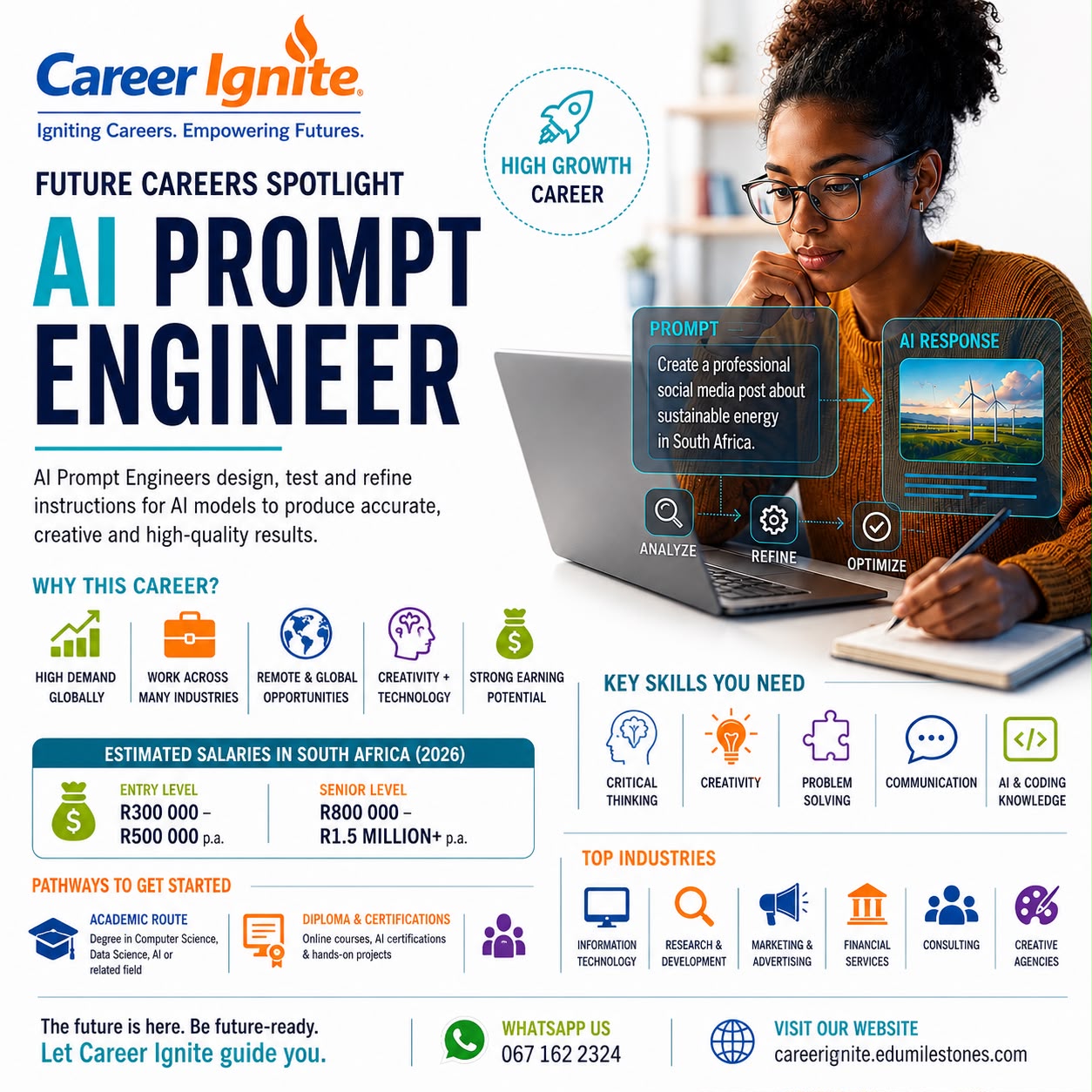
Generative AI systems respond to instructions known as prompts. Prompt engineering is the disciplined process of designing, testing and improving those instructions so that an AI system produces more useful, accurate and appropriate results. It involves much more than typing a clever question.
What does this professional do?
- Translates a real task into clear instructions, context and output requirements.
- Tests prompts across different examples and records where they fail.
- Designs evaluation criteria for accuracy, relevance, tone and safety.
- Works with developers, subject specialists, product teams and users.
- Improves workflows through templates, retrieval tools, automation and responsible human review.
Could this career suit you?
This work rewards curiosity, precise communication, critical thinking and comfort with experimentation. A prompt engineer must recognise when an answer sounds convincing but is unsupported. Domain knowledge—such as law, HR, finance, health or education—can be as valuable as technical knowledge.
Helpful school subjects
Languages, Mathematics, Information Technology, Computer Applications Technology, Business Studies and subject-specific disciplines can all contribute. Strong reading, writing and research habits are especially important because prompt quality depends on clarity and context.
Study and development routes
Routes include computer science, data science, software engineering, linguistics, information systems, communication or a specialist professional field combined with AI training. Learn basic programming, data handling, model limitations, evaluation and responsible AI. Build a portfolio showing the original problem, prompt iterations, evaluation method, safeguards and measurable improvement.
South African career outlook
Prompt engineering is a valuable capability, but it may not always remain a stand-alone job title. It is increasingly embedded in roles such as AI product specialist, automation consultant, conversation designer, software developer, researcher, marketer and knowledge manager. Learners should therefore build a broad professional foundation rather than prepare for only one narrow title.
Related careers to explore
AI Product Specialist; Conversational Designer; AI Automation Specialist; NLP Specialist; Knowledge Engineer; AI Evaluator; Responsible AI Specialist.
Career Quest question
Would you enjoy testing how language, logic and context change the quality of an AI system’s response?
Sources and editorial references
- UNESCO: Recommendation on the Ethics of Artificial Intelligence. https://www.unesco.org/en/artificial-intelligence/recommendation-ethics
Editorial note: precise salary and growth figures have deliberately not been published as facts without a named, dated source. Career opportunities and admission requirements change; readers should verify current information with employers and institutions. Information reviewed 29 August 2026.
Laiqah Bowers-Charles
Founder & CEO, Career Ignite
- • Certified Career Counsellor
- • Certified Career Assessment Practitioner
- • 25+ Years HR & Human Capital Leadership
Not sure whether this is your best-fit career?
A career should not be selected only because it appears exciting, pays well or is described as “in demand”. Career Ignite helps learners explore the relationship between their interests, personality, abilities, motivators and possible career environments.
Related articles
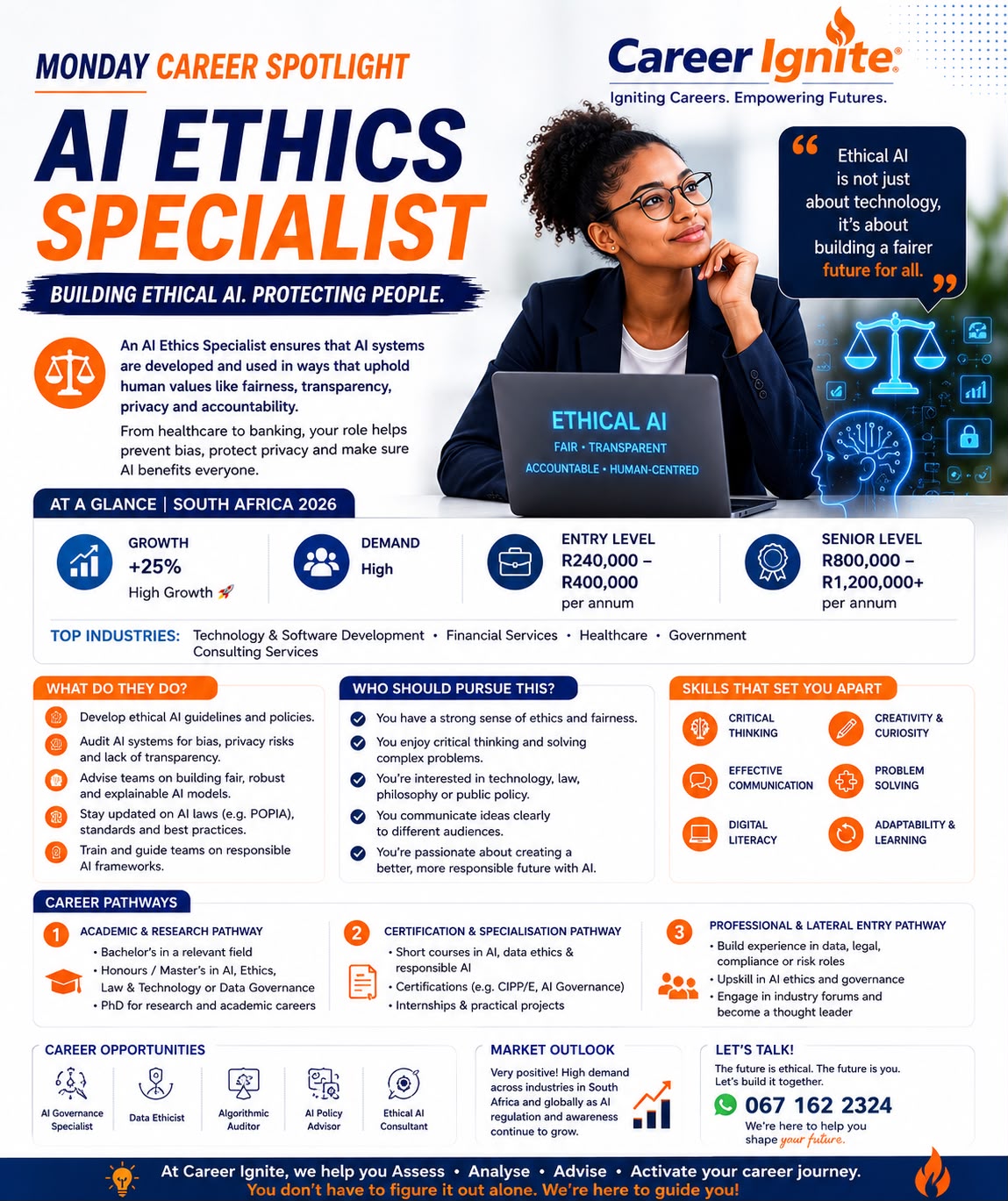
Explore the role of AI ethics specialists in identifying bias, protecting people and helping organisations govern artificial intelligence responsibly.
Read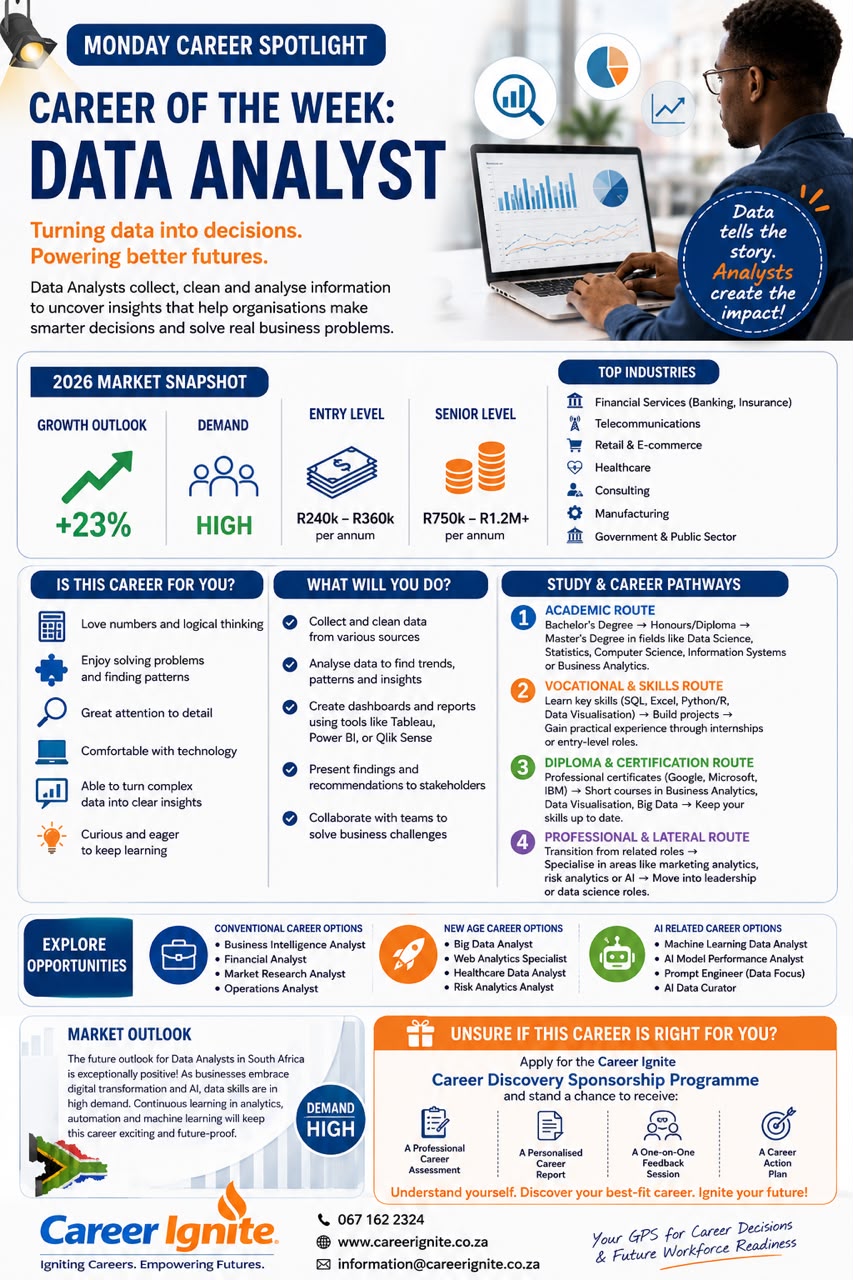
Learn how data analysts turn raw information into useful insights and what learners can do to begin building relevant skills.
Read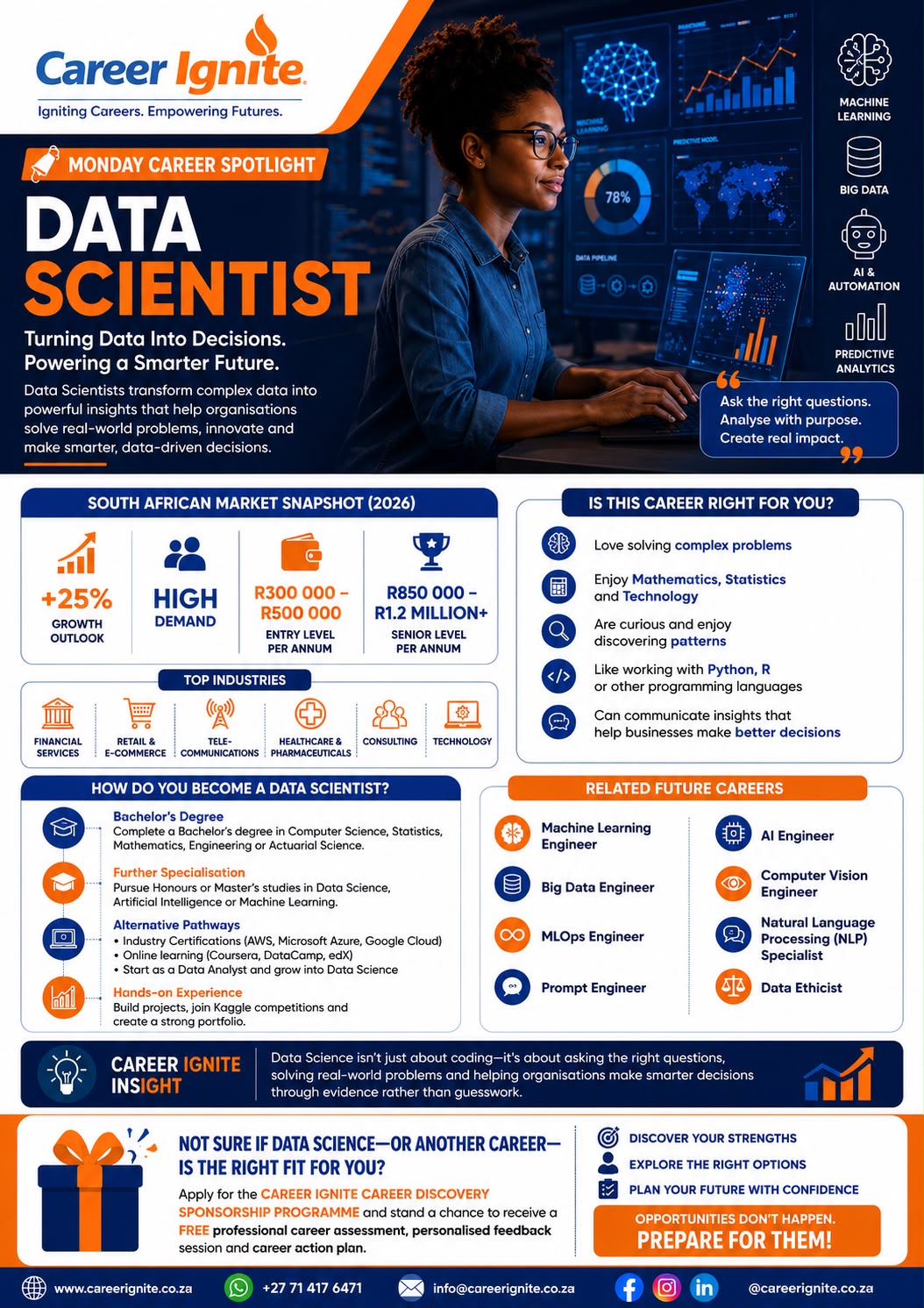
Discover how data scientists combine statistics, computing and subject knowledge to investigate questions and build data-driven solutions.
Read