
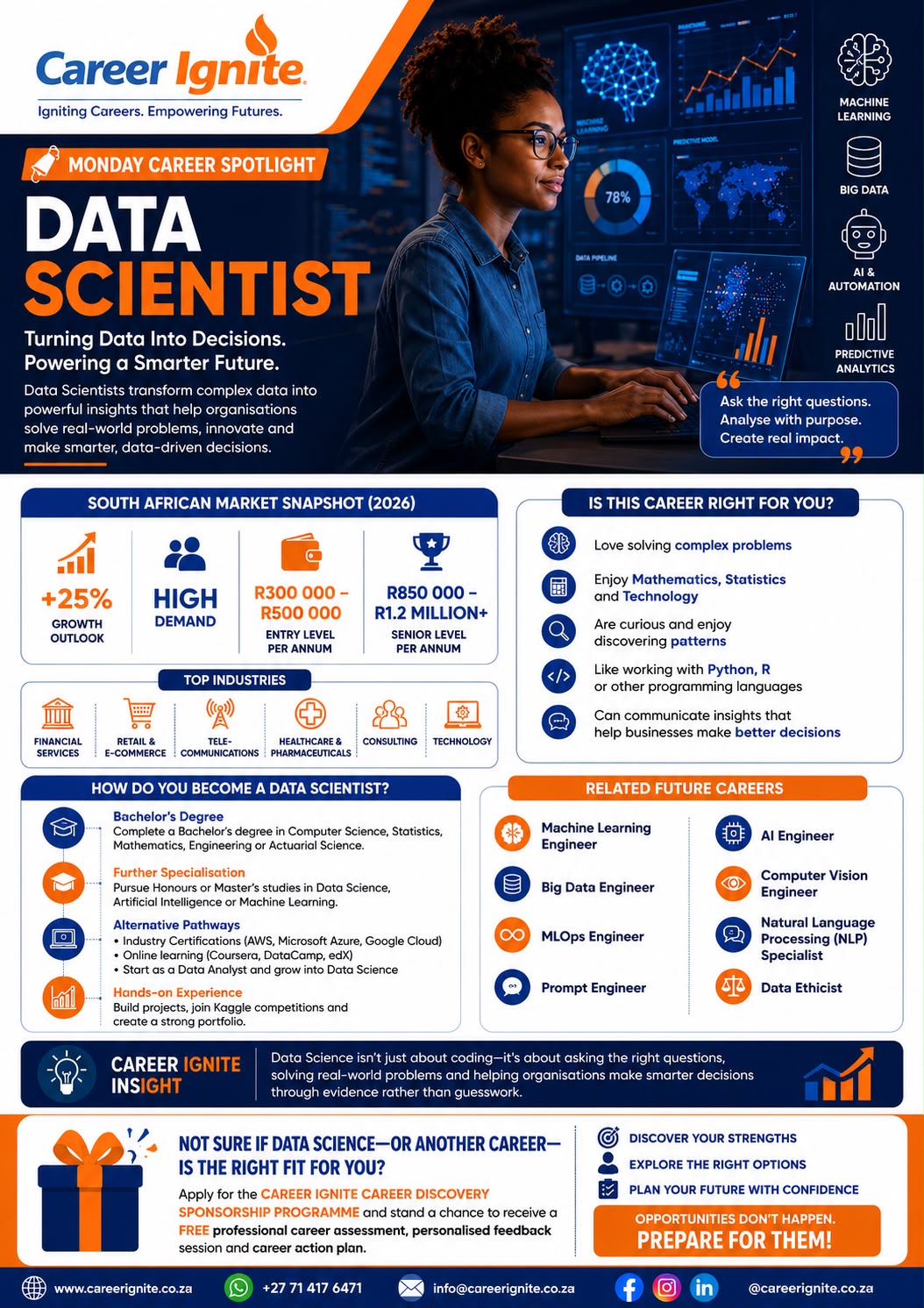
Data scientists use statistics, computing and subject knowledge to investigate complex questions. They may forecast demand, detect unusual behaviour, improve a service or build models that support decisions. The work begins with understanding the problem—not simply selecting an algorithm.
What does this professional do?
- Frames business or research questions that can be explored with data.
- Collects, cleans and combines large or complex datasets.
- Uses statistics, programming and machine-learning techniques.
- Tests models and checks whether results are reliable, fair and useful.
- Communicates findings, limitations and recommendations to decision-makers.
Could this career suit you?
This field may suit learners who enjoy mathematics, patterns, experimentation and solving open-ended problems. Persistence is essential because much of the work involves preparing data and investigating why an approach did not perform as expected. Data scientists also need to explain uncertainty honestly.
Helpful school subjects
Mathematics is usually central. Information Technology, Physical Sciences, Computer Applications Technology, Business Studies, Economics and languages may also be useful. Learners must confirm the admission and subject requirements for each programme.
Study and development routes
Typical foundations include statistics, mathematics, computer science, data science, engineering, actuarial science, economics or another quantitative field. UCT describes data science as multidisciplinary and combines statistics and computer science with applications across business, medicine, government and other domains. Develop programming, databases, visualisation, probability, statistics and responsible-data practices, then build projects that demonstrate the full problem-solving process.
South African career outlook
The 2024 South African National List of Occupations in High Demand includes Data Scientist. Opportunities occur in finance, retail, telecommunications, healthcare, consulting, technology, government and research. Job titles and entry requirements vary; some people begin as data analysts, statisticians, developers or researchers before moving into data-science roles.
Related careers to explore
Machine Learning Engineer; Big Data Engineer; MLOps Engineer; AI Engineer; Statistician; Data Analyst; Natural Language Processing Specialist.
Career Quest question
Would you enjoy using mathematics and code to test ideas, discover patterns and solve a real-world problem?
Sources and editorial references
- South African Department of Higher Education and Training: 2024 National List of Occupations in High Demand. https://www.dhet.gov.za/System%20Monitoring%20%20Labour%20Market%20Intelligence/Gazette_The%202024%20National%20List%20of%20Occupations%20in%20High%20Demand.pdf
- University of Cape Town: About Data Science at UCT. https://science.uct.ac.za/data-science/about-data-science-uct
- University of Cape Town: Business Science specialising in Statistics and Data Science. https://commerce.uct.ac.za/school-management-studies/programmes-undergraduate-programmes/bachelor-business-science-specialising-statistics-and-data-science
Editorial note: precise salary and growth figures have deliberately not been published as facts without a named, dated source. Career opportunities and admission requirements change; readers should verify current information with employers and institutions. Information reviewed 29 August 2026.
Laiqah Bowers-Charles
Founder & CEO, Career Ignite
- • Certified Career Counsellor
- • Certified Career Assessment Practitioner
- • 25+ Years HR & Human Capital Leadership
Not sure whether this is your best-fit career?
A career should not be selected only because it appears exciting, pays well or is described as “in demand”. Career Ignite helps learners explore the relationship between their interests, personality, abilities, motivators and possible career environments.
Related articles
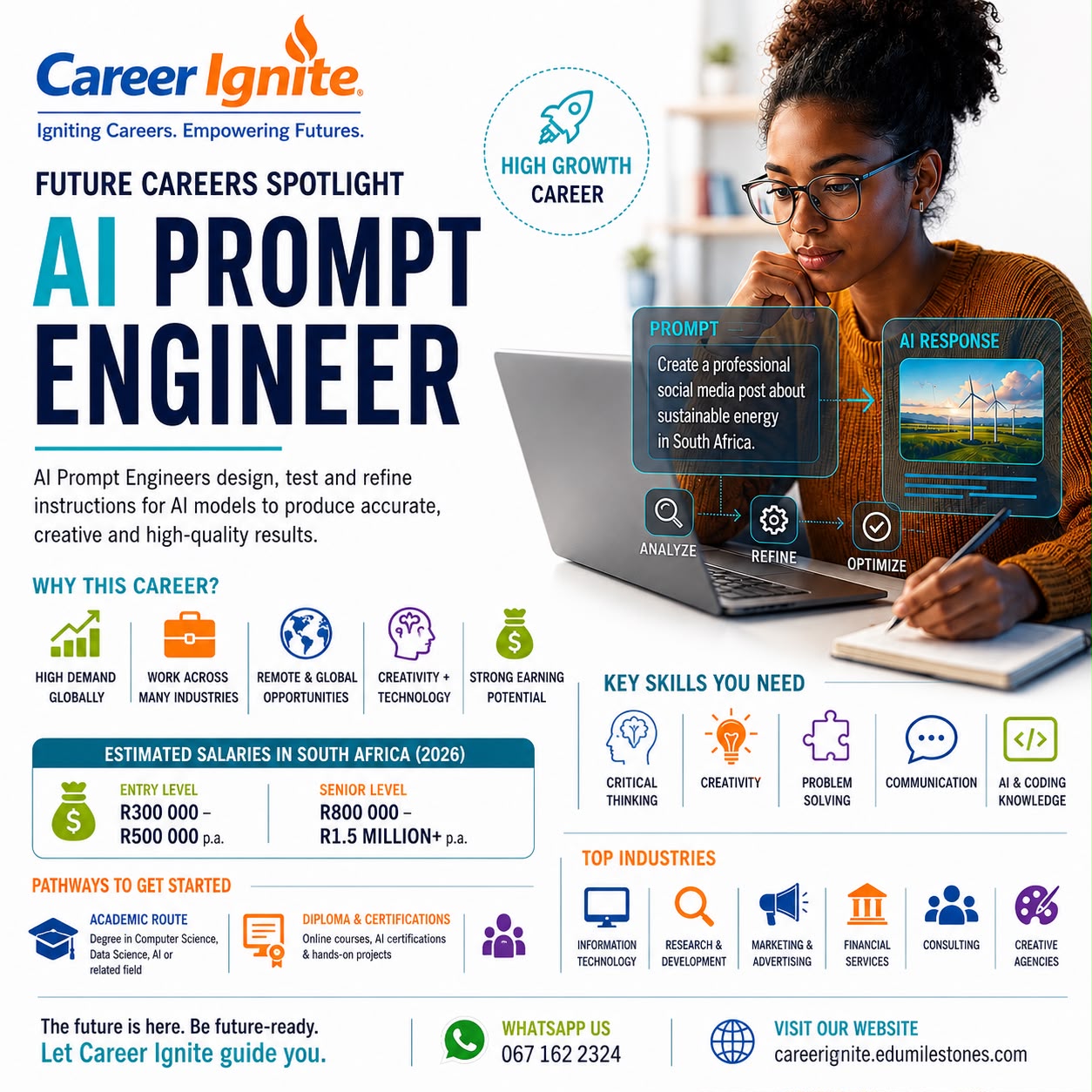
Understand prompt engineering, the work behind reliable AI outputs and why this capability is increasingly combined with broader professional expertise.
Read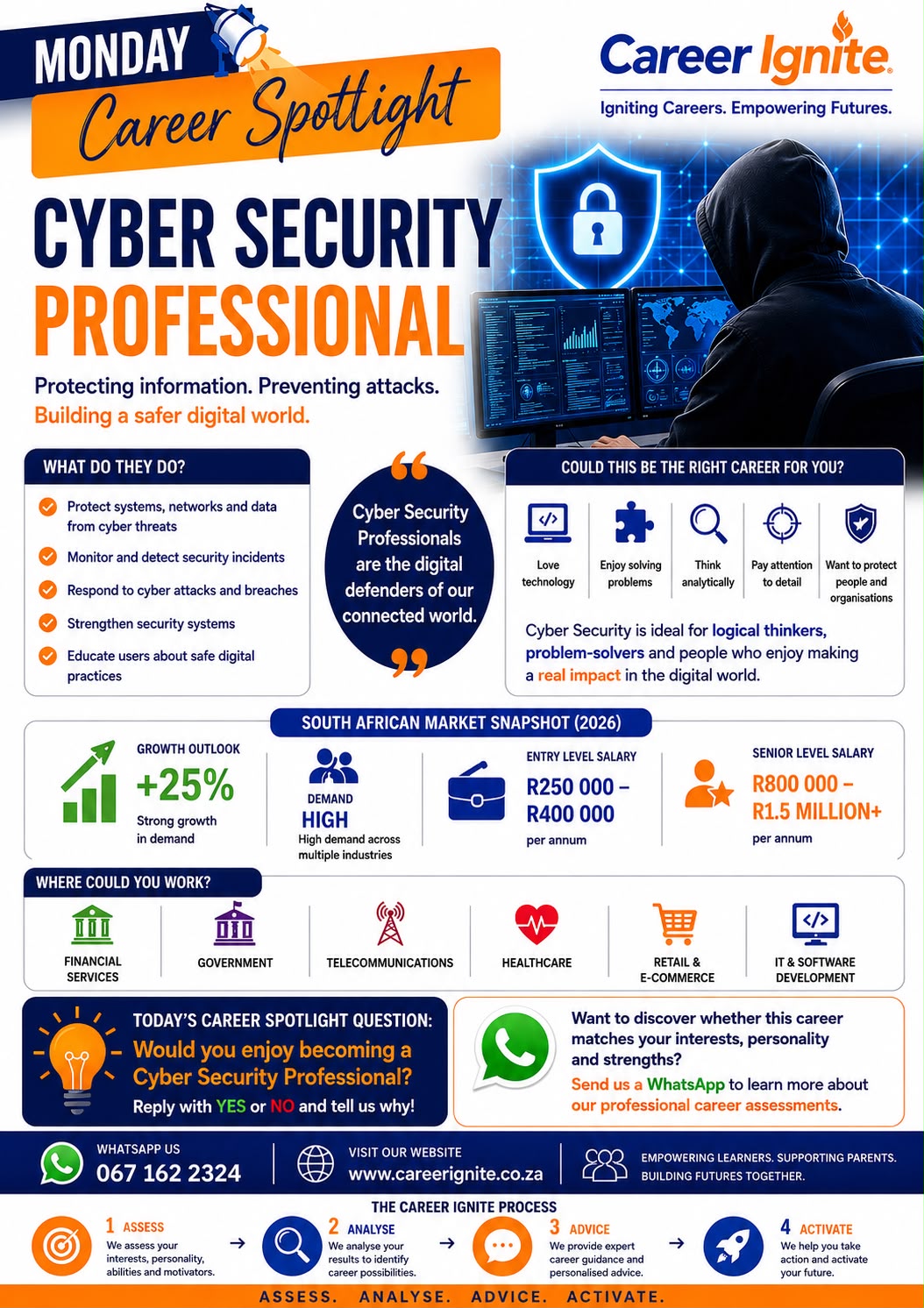
Learn how cybersecurity professionals protect systems and data, respond to threats and build safer digital environments.
Read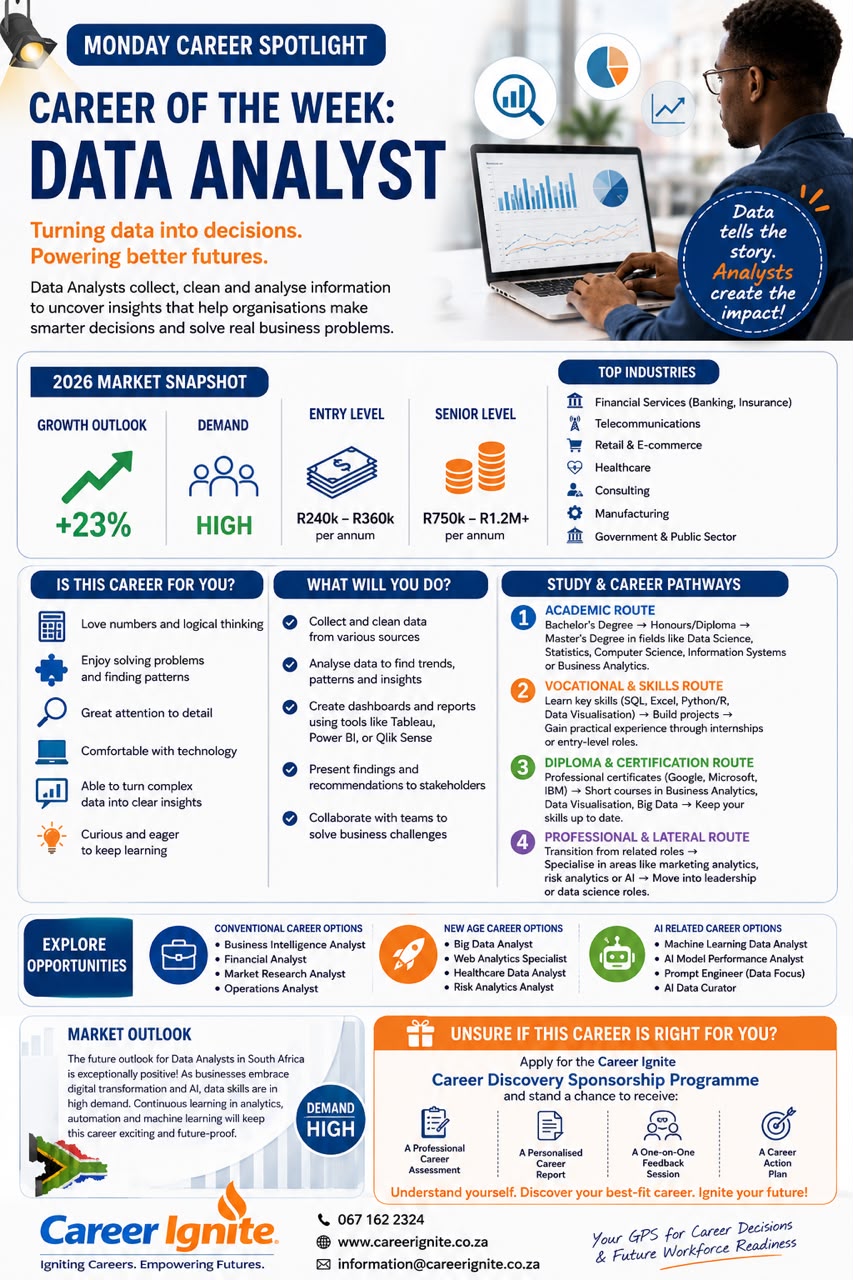
Learn how data analysts turn raw information into useful insights and what learners can do to begin building relevant skills.
Read